Safe Sex Checker & Safe Days Calculator
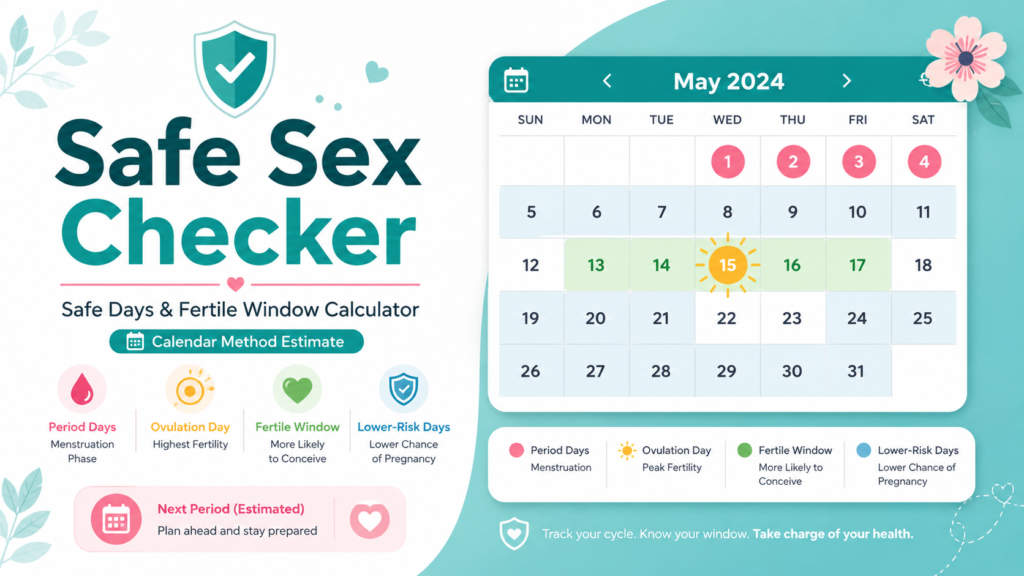
Use this safe sex checker online to estimate your period days, fertile days, ovulation day, lower-risk days, safe sex days, and next period date using the calendar method. It can help answer common questions like safe period for sex, safe days for sex, after period sex is safe or not, and safe period for sex to avoid pregnancy, but it does not guarantee that any day is completely safe.
What this safe sex checker can estimate
- Estimated ovulation day
- Estimated fertile days / higher pregnancy chance days
- Next expected period date
- Period days for the selected cycle
- Lower-risk safe days for sex, never 100% guaranteed
- Optional checked-date pregnancy risk estimate
Check Safe Days Using the Calendar Method
Enter your last period date and average cycle details to check estimated safe sex days, higher-risk fertile days, ovulation date, period days, and lower-risk days.
What Is a Safe Sex Checker or Safe Days Calculator?
A safe sex checker or safe days calculator is a period-based calculator that estimates your fertile window, ovulation day, period days, and lower-risk days in a menstrual cycle. Many users search for safe period for sex, safe days for sex, safe day for sex, safe sex period, safe sex days, safe sex calculator, and safe days for sex calculator when they want a simple way to understand pregnancy risk by date.
This page is designed as a safe sex days calculator for people who want to check the calendar method before planning sex. It can show when pregnancy chance may be higher, when the next period may start, and which dates may be lower-risk based on the details you enter.
The most important point is that “safe” does not mean risk-free. A calendar-based calculator cannot confirm your real ovulation day and cannot protect you from STIs. If your goal is to avoid pregnancy, use reliable contraception and speak with a qualified healthcare provider for personal advice.
How This Safe Sex Calendar Method Calculator Works
This safe sex calendar method calculator starts with the first day of your last period. It then uses your average cycle length to estimate your next period date. Ovulation is estimated by counting back about 14 days from the expected next period date.
To keep the result cautious, the calculator marks the five days before the estimated ovulation day, the ovulation day, and two buffer days after ovulation as higher-risk fertile days. These days are shown because pregnancy may be more likely near ovulation.
Dates outside the fertile window are shown as lower-risk estimates. They may be called safe days, safe period to have sex, or safe period for sex to avoid pregnancy in search terms, but on this page they are treated only as lower-risk days, not guaranteed safe days.
The calendar shows your full selected cycle. For example, if your last period starts near the end of one month and the cycle continues into the next month, the calculator displays both months so you can see the complete cycle clearly.
What Are High-Risk Fertile Days?
High-risk fertile days are the days near ovulation when the chance of pregnancy may be higher. Sperm can survive for several days inside the reproductive tract, so sex before ovulation may still lead to pregnancy. This is why the calculator marks several days before ovulation as higher-risk.
People often search for safe sex days, unsafe days for pregnancy, fertile window, when am I most fertile, and best days to get pregnant. This safe sex checker highlights those estimated fertile days so you can understand the timing better.
Safe Sex Checker for Avoiding Pregnancy or Trying to Conceive
If you want to avoid pregnancy, use this calculator only as an educational pregnancy risk checker. Do not depend on the calendar method alone, especially if your periods are irregular or your cycle length changes often.
If you are trying to conceive, the estimated fertile window may help you plan sex around the days when pregnancy is more likely. Tracking several cycles can make your cycle pattern easier to understand.
Safe Period for Sex: Before, During, and After Period
The phrase safe period for sex usually means the days in a cycle when pregnancy chance may be lower. In simple terms, days far from ovulation may be lower-risk, while days close to ovulation may be higher-risk. But because ovulation can shift, no calendar date can be called 100% safe.
After period sex is safe or not?
After period sex may be lower-risk for some people, but it is not always safe. If you have a short cycle, long bleeding, irregular periods, or early ovulation, the days soon after your period may move closer to your fertile window. This is why searches like after period sex is safe, safe days after period, and safe period after menstruation should always be understood as estimates.
Can you get pregnant during your period?
Pregnancy during a period is less likely for many people, but it is still possible. Risk may be higher with shorter cycles, irregular periods, or ovulation that happens earlier than expected. This calculator marks period days separately, but it does not mark them as completely safe.
Can you get pregnant before your period?
Pregnancy is often less likely right before a predictable period because ovulation has usually already passed. However, if ovulation happens later than expected or your period date changes, the risk estimate can also change.
Safe Days for Sex Calculator: What the Result Means
When you use this safe days for sex calculator, the result is divided into period days, higher-risk fertile days, ovulation day, and lower-risk days. This makes it easier to see which dates may need extra caution if you want to avoid pregnancy.
A lower-risk day means the calculator does not place that date inside the estimated fertile window. It does not mean pregnancy is impossible. A higher-risk day means the date is close to the estimated ovulation window, so unprotected sex may carry more pregnancy risk.
If you use the optional “check a specific sex date” field, the safe sex calculator will tell you whether that date falls on a period day, fertile day, ovulation estimate, lower-risk day, or outside the selected cycle.
Common Safe Sex Questions
Is it safe to have sex during pregnancy?
For many uncomplicated pregnancies, sex during pregnancy may be safe, but it depends on personal health, pregnancy history, symptoms, and your healthcare provider’s advice. If there is bleeding, pain, leaking fluid, placenta concerns, risk of preterm labor, or any medical warning, speak with a doctor or midwife before having sex.
Sex during pregnancy is safe or not?
The answer is not the same for everyone. Some people can have sex during pregnancy without problems, while others may be advised to avoid vaginal, oral, or anal sex because of a medical condition. If you are unsure, professional medical advice is the safest option.
Is anal sex safe?
Anal sex can carry STI risk, irritation risk, and injury risk if protection and lubrication are not used correctly. Condoms and suitable lubricant can reduce risk, but they do not remove all risk. Avoid moving from anal sex to vaginal sex without changing condoms or cleaning properly, because bacteria can be transferred.
How many times sex in a day is safe?
There is no single safe number that applies to everyone. It depends on comfort, consent, energy, health, protection, and whether there is pain, bleeding, irritation, or infection risk. Stop if sex becomes painful or uncomfortable, and speak with a healthcare provider if symptoms continue.
Why Calendar Method Safe Days Are Not Always Safe
The calendar method can be useful for understanding your cycle, but safe days are not always safe. Ovulation may happen earlier or later than expected, and a date-based calculator cannot know exactly when ovulation happens in your body.
Stress, illness, travel, sleep changes, breastfeeding, medication, hormonal changes, emergency contraception, weight changes, and normal body variation can all change cycle timing. Because of this, a safe sex calendar checker, rhythm method calculator, or pregnancy chance calculator should only be used as an estimate.
Who Should Be Careful Using a Safe Sex Calendar Checker?
This tool may be less reliable for people with irregular periods, PCOS, postpartum cycles, breastfeeding, recent hormonal birth control use, teenage cycles, perimenopause, recent emergency contraception use, or cycles that often change in length.
If you are trying to avoid pregnancy, speak with a qualified healthcare provider about reliable birth control. If you are worried about STIs, condoms, STI testing, and professional guidance are important.
Tips for Better Safe Days and Cycle Tracking
- Track the first day of every period for several months.
- Write down your average cycle length and average period length.
- Do not depend on only one month of safe period for sex results.
- Use the checked-date option if you want to review one specific sex date.
- Notice cervical mucus changes if you are comfortable tracking them.
- Use ovulation predictor kits if you are trying to identify ovulation more closely.
- Track basal body temperature if you know how to measure it consistently.
- Use condoms correctly to help reduce pregnancy risk and STI risk.
- Speak with a healthcare provider about reliable birth control if you want to avoid pregnancy.
When to Talk to a Healthcare Provider
Talk to a qualified healthcare provider if you have missed periods, very painful periods, irregular cycles, pregnancy concerns, birth control questions, STI concerns, or questions about emergency contraception. You should also seek professional guidance if you are trying to conceive and have concerns about ovulation, cycle timing, or fertility.
Frequently Asked Questions
What is a safe sex checker?
A safe sex checker estimates lower-risk days and higher-risk fertile days based on your last period date and average cycle length. It cannot guarantee that any day is completely safe from pregnancy.
What is a safe days calculator?
A safe sex period calculator is a calendar method tool that estimates period days, fertile days, ovulation day, and lower-risk days. It is helpful for cycle awareness, but it is not a guaranteed birth control method.
How do I calculate safe days after my period?
You can estimate safe days after your period by comparing your period dates with your expected fertile window. However, days after a period may still carry pregnancy risk, especially with short or irregular cycles.
What is the safe period for sex?
The safe period for sex usually refers to lower-risk days that are farther from ovulation. Because ovulation can shift, these days are only estimates and should not be treated as completely safe.
What are safe days for sex?
Safe days for sex are commonly understood as days when pregnancy chance may be lower. This calculator shows those days as lower-risk estimates, not as risk-free days.
Is after period sex safe?
After period sex may be lower-risk for some people, but it is not always safe. Short cycles, early ovulation, and irregular periods can increase pregnancy risk soon after bleeding ends.
Are safe days 100% safe?
No. Safe days are not 100% safe. Ovulation can shift, cycles can change, and pregnancy can happen when timing is different than expected.
What days are highest risk for pregnancy?
The highest risk days are usually the days leading up to ovulation and around ovulation. This safe sex calendar marks the five days before estimated ovulation, the estimated ovulation day, and two extra buffer days after it as higher-risk fertile days.
When am I most fertile?
You are usually most fertile near ovulation. This calculator uses the five days before the estimated ovulation day, the estimated ovulation day, and two extra buffer days after it as the higher-risk fertile window.
Can I get pregnant during my period?
It is less likely for many people, but it is still possible. The chance may be higher with short cycles, irregular cycles, or early ovulation.
Can I get pregnant right after my period?
Yes, it may be possible, especially if you ovulate early or have a short menstrual cycle. Sperm survival can also affect pregnancy timing.
Can I get pregnant before my period?
Pregnancy is usually less likely right before a predictable period, but it is not impossible if ovulation timing is different than expected.
Is it safe to have sex during pregnancy?
Sex during pregnancy may be safe for many uncomplicated pregnancies, but it depends on your personal health and pregnancy condition. Ask your healthcare provider if you have pain, bleeding, fluid leakage, placenta concerns, or any pregnancy risk factor.
Is anal sex safe?
Anal sex can carry STI, irritation, and injury risks. Condoms, suitable lubricant, and good hygiene can reduce risk, but they do not remove all risk.
How many times sex in a day is safe?
There is no single number that is safe for everyone. It depends on comfort, consent, health, protection, and whether there is pain or irritation.
How accurate is a safe sex calendar method calculator?
A safe sex calendar method calculator gives an estimate based on average cycle timing. It may be less accurate for irregular cycles or months when ovulation changes.
What is the ovulation day?
Ovulation day is the estimated day when an ovary releases an egg. This calculator estimates it as about 14 days before the next expected period.
Does this calculator protect against STIs?
No. This calculator does not protect against STIs. Condoms can help reduce STI risk and pregnancy risk when used correctly.
Should I use this safe sex checker for birth control?
This safe sex checker should not be used as a guaranteed birth control method. Speak with a healthcare provider about reliable pregnancy prevention options.
What if my periods are irregular?
If your periods are irregular, date-based estimates may be less reliable. Consider tracking several cycles and speaking with a healthcare provider.
What should I do after unprotected sex?
If you are worried about pregnancy after unprotected sex, speak with a healthcare provider or pharmacist as soon as possible about your options, including emergency contraception when appropriate.
Related Tools
Explore more period, ovulation, pregnancy, and safe days tools on Find New Daily.